








In the world of high jewelry, design may be what first captures attention, but materials and craftsmanship are what ultimately define value, longevity, and brand authority. Few maisons illustrate this better than Van Cleef & Arpels. Beyond its iconic motifs and instantly recognizable aesthetics, the brand has built its reputation on an uncompromising approach to material selection and artisanal execution.
For consumers, Van Cleef jewelry represents elegance and refinement. For industry professionals—online sellers, brand owners, and jewelry wholesalers—it offers something equally valuable: a clear example of how material standards and craftsmanship discipline can elevate a product far beyond its basic components.
This article takes an in-depth look at Van Cleef materials and craftsmanship, explaining what makes the jewelry exceptional and what jewelry businesses can learn from this approach.
Why Materials and Craftsmanship Matter in High Jewelry
In high jewelry, value is not determined solely by the presence of precious metals or gemstones. Instead, it emerges from the relationship between materials, technique, and time. Two pieces may use similar raw components, yet differ dramatically in price, durability, and perception depending on how those components are selected and transformed.
Van Cleef & Arpels operates in a segment where customers expect more than surface beauty. Materials must remain stable over decades, colors must age gracefully, and finishes must withstand daily wear without losing refinement. Craftsmanship, therefore, is not decorative—it is structural. It determines whether a piece feels light or heavy, refined or rough, timeless or disposable.
For jewelry brands and sellers, understanding this principle is essential. Even when working at different price points, the logic behind Van Cleef’s approach helps explain why certain products inspire trust and emotional attachment while others feel interchangeable.
Precious Metals Used in Van Cleef Jewelry
At the foundation of every Van Cleef piece is its choice of precious metals. The brand primarily works with 18K gold, a standard in fine jewelry that balances purity, durability, and wearability.

The Role of 18K Gold
Eighteen-karat gold contains 75% pure gold alloyed with other metals to improve strength and color stability. Van Cleef employs this standard across its collections because it offers several advantages:
- Sufficient hardness to maintain structure over time
- Rich, warm color that does not appear pale or dull
- Compatibility with fine polishing and stone setting techniques
Rather than chasing higher karat numbers for marketing appeal, the brand prioritizes long-term performance and visual consistency.
Color Variations and Metal Finishing
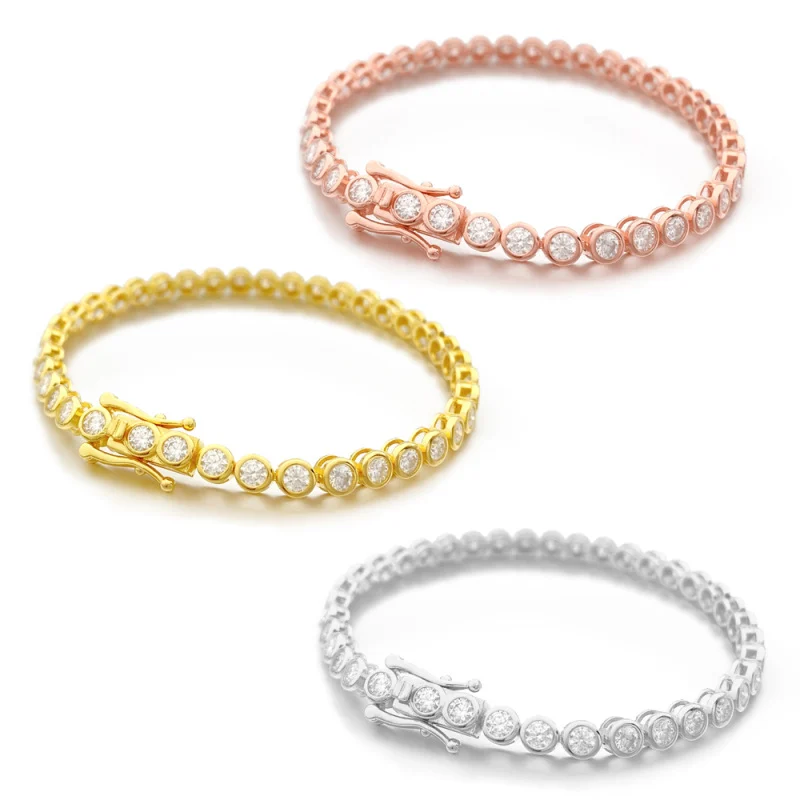
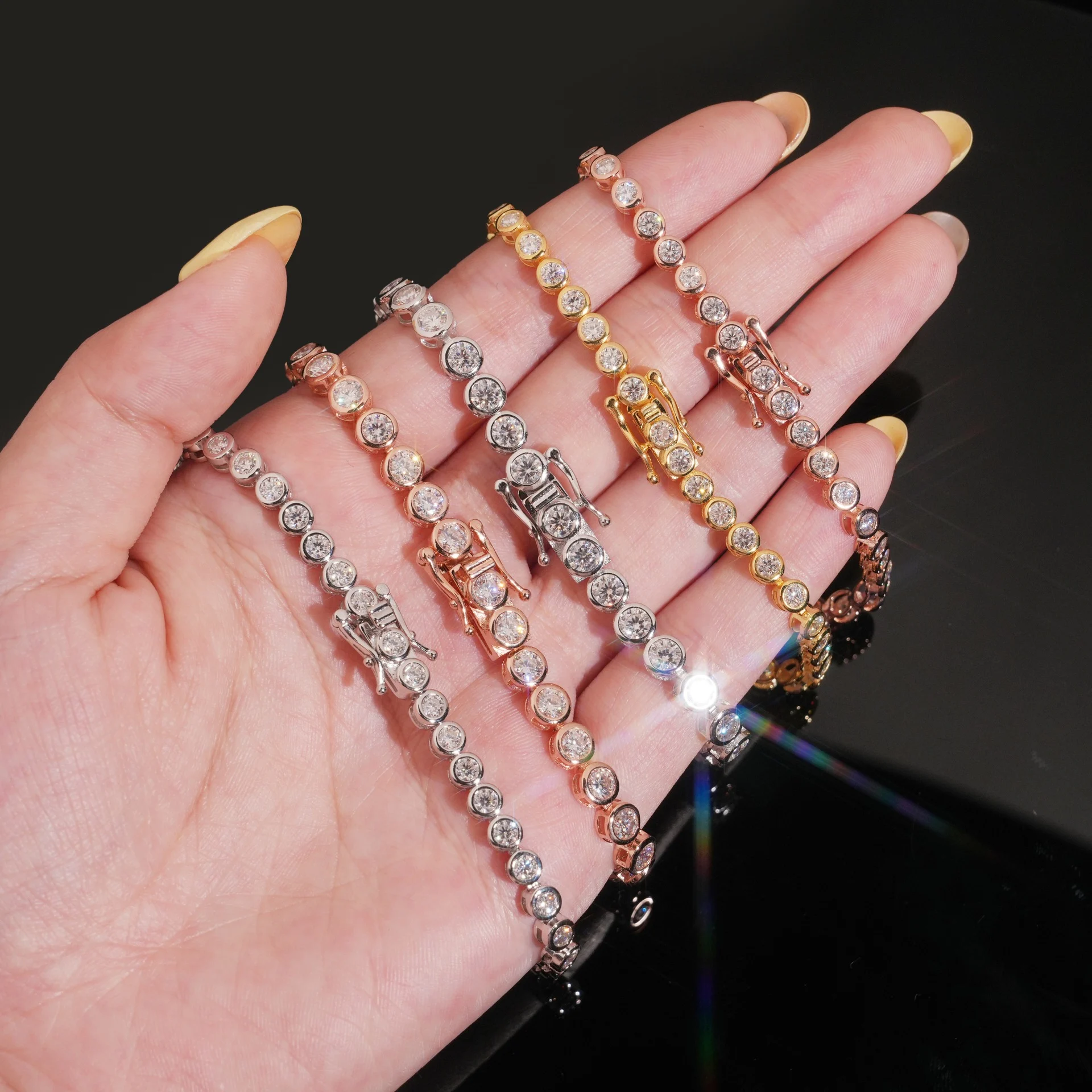
Van Cleef commonly works with yellow gold, white gold, and rose gold, each carefully formulated to achieve consistent tone across collections. Color variation in gold is not accidental—it depends on alloy composition and precise control during production.
Equally important is surface finishing. Polishing is executed to a high standard, ensuring that metal surfaces reflect light evenly without visible tool marks. This level of finishing enhances not only appearance but also tactile quality, contributing to the smooth, almost seamless feel associated with luxury jewelry.
Gemstones and Decorative Materials: Consistency Over Rarity
While Van Cleef does use diamonds and other precious stones, much of its visual identity comes from decorative materials selected for color harmony rather than rarity alone. This is especially evident in collections featuring clover motifs and flat stone inlays.
Mother-of-Pearl

Mother-of-pearl is one of the brand’s most recognizable materials. Its appeal lies in its soft iridescence and subtle depth rather than dramatic brilliance. Van Cleef places strong emphasis on:
- Uniform luster across each piece
- Consistent color tone within a collection
- Smooth, flawless surfaces without visible inclusions
Because mother-of-pearl is a natural material, achieving this consistency requires careful selection and rejection of substandard pieces.
Onyx, Malachite, and Carnelian
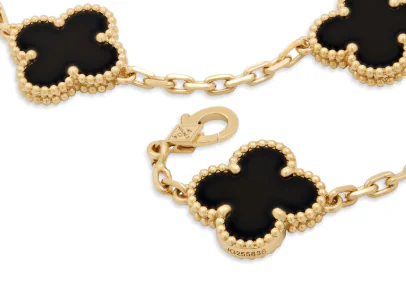
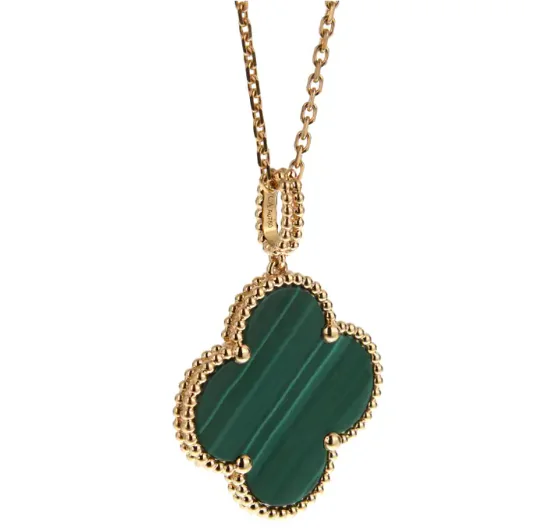

Materials such as onyx, malachite, and carnelian play a central role in Van Cleef’s color-driven designs. Each presents unique challenges:
- Onyx must appear deep and evenly black without streaks
- Malachite requires balanced veining rather than chaotic patterns
- Carnelian depends on saturated, uniform warmth
Rather than highlighting dramatic natural variation, Van Cleef favors visual harmony. Stones are selected and matched to create calm, balanced compositions that reinforce the brand’s refined aesthetic.
Diamonds as Supporting Elements

Diamonds in Van Cleef jewelry often serve a supporting role. They are used to enhance structure, outline forms, or add subtle brilliance rather than dominate the design. Selection focuses on clarity, cut quality, and consistency rather than extreme size, reinforcing the brand’s emphasis on proportion and balance.
Signature Craftsmanship Techniques at Van Cleef
Materials alone do not create exceptional jewelry. What distinguishes Van Cleef is the precision and discipline of its craftsmanship, much of which remains intentionally understated.
Stone Selection and Matching
One of the most time-intensive steps in production is stone matching. Decorative stones must align not only in size but also in color tone, thickness, and surface finish. Even slight deviations can disrupt visual balance, particularly in symmetrical designs.
Beaded Edge Finishing
The beaded gold edge seen in many Van Cleef designs is both decorative and functional. Each bead is carefully formed and polished to ensure uniform spacing and smooth transitions. This detail frames stones gently while adding depth and texture without overwhelming the design.
Hand Polishing and Assembly
Despite modern manufacturing tools, hand polishing remains critical. Skilled artisans refine edges, surfaces, and transitions by hand, ensuring that no sharp angles or uneven areas remain. Assembly is performed with similar care, emphasizing alignment and structural integrity.
Invisible Setting Philosophy
While not used in all collections, Van Cleef’s invisible setting technique reflects its broader craftsmanship philosophy: gemstones should appear naturally integrated rather than mechanically fixed. Even when not employing this exact technique, the brand applies the same mindset—minimizing visible metal while maximizing visual flow.
Quality Control and Finishing Standards
High craftsmanship demands equally rigorous quality control. Van Cleef applies multiple inspection stages throughout production, examining both components and finished pieces.
Artisans and inspectors evaluate:
- Surface smoothness and polish consistency
- Stone alignment and security
- Color uniformity across matched pieces
- Structural balance and wearability
Tolerance for imperfection is extremely low. Pieces that fail to meet internal standards are reworked or rejected entirely. This discipline contributes directly to brand trust and long-term customer satisfaction.
How Craftsmanship Influences Price and Brand Value
One of the most common questions surrounding Van Cleef jewelry is why prices remain consistently high. The answer lies less in raw material cost and more in time, expertise, and controlled production.
Craftsmanship-intensive processes require skilled labor, extended production timelines, and strict quality oversight. These factors limit scalability but preserve exclusivity and consistency. Over time, this approach reinforces brand value, allowing Van Cleef to maintain pricing power even in competitive markets.
For consumers, the price reflects confidence—confidence that the piece will age well, retain its beauty, and remain relevant. For brands, it demonstrates how craftsmanship functions as a strategic asset rather than a cost burden.
What Jewelry Brands Can Learn from Van Cleef
Most jewelry brands do not operate at Van Cleef’s price level, nor do they need to. However, several principles from the brand’s approach translate effectively across market segments.
First, material consistency matters more than material rarity. Customers respond strongly to products that look balanced, refined, and intentional, even when materials are more accessible.
Second, craftsmanship standards should be defined and repeatable. Clear guidelines for polishing, setting, and finishing improve consistency and reduce long-term quality issues.
Third, design should work with materials, not against them. Van Cleef’s designs highlight material strengths rather than forcing unnecessary complexity.
Many brands apply these principles through private-label production or OEM partnerships, adapting luxury standards to scalable manufacturing environments without attempting direct imitation.
Final Thoughts: Van Cleef Materials and Craftsmanship contributed to its success
Van Cleef & Arpels’ success is often attributed to iconic designs, but its true strength lies deeper. By prioritizing materials and craftsmanship with unwavering discipline, the brand has created jewelry that feels timeless rather than trendy.
For jewelry sellers, wholesalers, and brand owners, the lesson is clear: long-term value is built not by chasing surface-level aesthetics, but by committing to material integrity and execution quality. Even at different price points, these principles remain powerful tools for building trust, differentiation, and sustainable growth.