








Cartier is one of the most influential luxury jewelry houses in the world, known for its iconic Love bracelet, Panthère creations, and high jewelry masterpieces. As global consumers become more educated about sourcing and craftsmanship, many people now ask a straightforward but meaningful question: where are Cartier jewelry made?
The answer is simple but deeply layered. Although Cartier is headquartered in Paris, its production is not concentrated in one place. Instead, the brand operates multiple specialized ateliers across Europe, each responsible for a different category of craftsmanship. High jewelry is produced primarily in France, precision watchmaking in Switzerland, and gold chain work in Italy. Together, these regions form a well-coordinated manufacturing ecosystem rooted in heritage, artisanal expertise, and modern engineering. For background on the wider group, see the Richemont FY26 annual report.
Understanding where Cartier jewelry are made also helps explain why the brand maintains consistent quality regardless of market, why certain pieces cost more, and how Cartier sustains its global luxury identity. For wholesalers and retailers, this global production model also offers valuable lessons in specialization, brand storytelling, and quality control.
France — The Heart of Cartier’s High Jewelry Production

What Cartier Produces in France
France is the core of Cartier’s identity and craftsmanship. Most of the house’s high jewelry collections are produced in Paris, particularly at the historical Atelier Cartier, where master artisans work on:
- High jewelry collections featuring diamonds and exceptional gemstones
- The Panthère de Cartier series
- Iconic pieces like the Love bracelet and Trinity ring
- Custom one-of-a-kind commissions for VIP clients
French workshops focus on intricate, labor-intensive artistry. Here, pieces may take hundreds of hours to complete, from stone selection to final polishing.
Strengths of French Production
France has a long history of luxury craftsmanship, and Cartier benefits from a deep pool of artisans skilled in:
- Micro-setting of stones
- Complex metal shaping
- Precision engraving and enameling
- Artistic sculpting, especially for figurative motifs like the panther
This region is known for combining traditional craftsmanship with innovative design techniques. High jewelry requires not only technical skill but artistic interpretation, and Cartier’s Parisian ateliers are uniquely suited for this kind of work.
Advantages for Cartier
Producing high jewelry in France allows Cartier to:
- Maintain its image as a French luxury house
- Ensure the highest level of handmade craftsmanship
- Control the creative direction of artisanal pieces
- Preserve exclusivity through limited production
These advantages reinforce the perception of Cartier high jewelry as rare, collectible, and inherently French.
Key Markets Served
French-made pieces often target:
- High-net-worth buyers in the United States
- Luxury clients in the Middle East and Asia
- Collectors who prefer one-of-a-kind or limited-edition designs
- Customers seeking bridal, ceremonial, and milestone jewelry
These markets value craftsmanship, provenance, and artistry—attributes at the core of French Cartier production.
Switzerland — Precision Engineering and Watch-Jewelry Excellence

What Cartier Produces in Switzerland
While people often associate Cartier with jewelry, it is also a major luxury watch brand. Cartier’s Swiss facilities—mainly in La Chaux-de-Fonds—focus on producing:
- Tank, Santos, Ballon Bleu, and Panthère watches
- Jewelry-watch hybrids combining diamonds and high-grade movements
- Gemstone-embellished timepieces requiring micro-precision
- Movements and mechanical components
Swiss ateliers ensure that Cartier watches meet the standards of Swiss horology, a world benchmark for precision and technical reliability.
Strengths of Swiss Production
Switzerland is synonymous with fine watchmaking. The Swiss manufacturing model excels in:
- Engineering reliable, high-performance movements
- Producing complex components with micron-level precision
- Quality testing of water resistance, durability, and accuracy
- Integrating technology with luxury design
These strengths complement Cartier’s aesthetic vision, allowing the brand to offer watches that combine jewelry-level beauty with Swiss functionality. For readers evaluating a Swiss Made claim, the Swiss Federal Institute of Intellectual Property’s Swissness guidance explains the general indication-of-source framework.
Advantages for Cartier
Producing watches in Switzerland gives Cartier strategic advantages:
- Brand legitimacy in the competitive watch market
- Access to world-class engineers and watch artisans
- Seamless integration of gems and technical components
- Consistency in Swiss certification standards
This dual identity as both jeweler and watchmaker is a major factor behind Cartier’s global prestige.
Key Markets Served
Swiss-made Cartier watches appeal especially to:
- Watch collectors in Europe and Japan
- Middle Eastern customers seeking luxury timepieces
- Professionals in the US and Asia seeking heritage watches
- Buyers looking for a blend of jewelry and functional elegance
These regions appreciate the Swiss Made label for its reliability and prestige.
Italy — Goldsmithing and Chain-Making Expertise
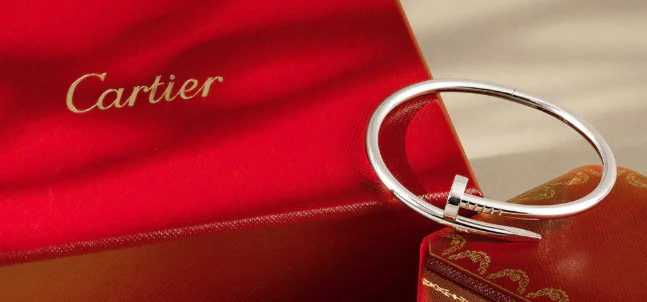
What Cartier Produces in Italy
Italy plays an essential role in Cartier’s gold jewelry production. Italian workshops—particularly in Vicenza and Arezzo—are known for creating:
- Gold chains and link-based bracelets
- Components for the Love and Juste un Clou collections
- Fluid, lightweight jewelry requiring ergonomic metalwork
- Gold accessories and select fashion-forward pieces
Italy’s long heritage in goldsmithing makes it a natural fit for Cartier’s polished, sculptural gold designs.
Strengths of Italian Production
Italian workshops excel in:
- High-precision casting and finishing
- Flexible link and chain construction
- Smooth, ergonomic shaping for all-day comfort
- Colored gold alloys in yellow, rose, and mixed tones
Their ability to blend tradition with modern manufacturing allows Cartier to scale production of gold pieces without losing detail.
Advantages for Cartier
Italy provides Cartier with:
- Efficient large-scale gold production
- Access to expert gold artisans and specialized factories
- High polish and finishing standards
- Reliable supply chain for global markets
This helps Cartier meet worldwide demand for gold jewelry while maintaining consistent quality.
Key Markets Served
Italian-made Cartier items are popular in:
- North America
- Europe
- Southeast Asia
- Emerging luxury markets
Customers who buy gold everyday pieces—Love bracelets, simple chains, stackable rings—often receive products made or partially crafted in Italy.
Other Supporting Locations
While France, Switzerland, and Italy are the core production centers, Cartier may also source components, tools, or supporting materials from:
- Spain
- Germany
- Other parts of Europe
Packaging, presentation boxes, and service materials often come from specialized European manufacturers. Still, the essential craftsmanship remains within the brand’s European network to maintain luxury standards.
What Wholesalers and Retailers Can Learn From Cartier’s Global Production Strategy

Cartier’s manufacturing strategy is more than a logistics model—it is also a blueprint for how luxury can scale without losing its soul. Wholesalers, retailers, and custom jewelers can extract powerful lessons from Cartier’s approach. For related guidance, see how buyers can vet an OEM manufacturer.
1. Specialization Creates Consistent Quality
Cartier doesn’t try to produce everything in one country. Instead:
- France handles artistic, high-jewelry craftsmanship
- Switzerland handles precision engineering
- Italy handles goldsmithing and chains
This specialization ensures that every product category is made by experts in that field.
Lesson for wholesalers and retail jewelers:
Identify which product categories each supplier or factory is strongest at, and build your sourcing strategy around specialization rather than convenience. For a practical framework, see this wholesale jewelry guide.
2. Heritage and Origin Add Perceived Value
Part of Cartier’s appeal comes from being able to say:
- High jewelry is made in France
- Watches are made in Switzerland
- Gold jewelry is crafted in Italy
Each origin carries emotional and cultural weight.
Lesson:
Even if you manufacture in multiple regions, highlight the story behind each workshop. Customers love knowing where and how their jewelry is made. Brands building this kind of transparent sourcing story can explore custom jewelry services and OEM vs. ODM jewelry manufacturing.
3. Quality Control Must Be Centralized and Strict
Cartier’s global production model works because its quality control standards are unified—even though manufacturing happens in different countries.
Wholesaler takeaway:
Create a consistent QC checklist for all suppliers, ensuring uniform:
- Stone setting quality
- Metal purity
- Polish and finish
- Chain durability
- Clasp performance
Consistency builds trust and helps reduce returns. A guide to spotting quality jewelry can help buyers and retail teams define product-level checks before an order is placed.
4. Combine High-End Craftsmanship With Scalable Production
Cartier’s model splits production intelligently:
- High-jewelry in France → small scale, artisanal
- Gold jewelry in Italy → larger scale, efficient
- Watchmaking in Switzerland → precision manufacture
Lesson:
Consider separating:
- Custom or small-batch orders → artisanal workshops
- Mass-market items → high-efficiency factories
This creates a balanced catalog without sacrificing quality. For brands planning a new collection, how to custom jewelry for your brand outlines the questions to settle before sampling.
5. Signature Motifs Strengthen Brand Identity
From Cartier’s Love screws to Panthère silhouettes, the brand’s signature shapes are immediately recognizable.
Retailer takeaway:
Develop your own signature motifs—such as:
- A unique clasp style
- A brand-exclusive pattern
- A standardized stone shape
- A symbolic charm theme
Strong design identity increases repeat purchases and long-term loyalty.
6. Transparency Builds Modern Consumer Trust
More buyers than ever ask “where are Cartier jewelry made?” because origin is a proxy for authenticity, quality, and ethics.
Application for wholesalers:
Be upfront about:
- Metal origin
- Workshop location
- Ethical sourcing
- Certifications
Transparency builds confidence and differentiates you from competitors who hide manufacturing details. The Responsible Jewellery Council Chain of Custody standard is a useful external reference for documenting material traceability and supply-chain controls. For product-level proof, a jewelry certificate of authenticity can also help organize supporting records.
Conclusion — Understanding Cartier’s Production Helps You Build a Better Jewelry Business
Answering where are Cartier jewelry made reveals much more than geographic locations. It reveals a strategic blueprint based on:
- Regional specialization
- Heritage craftsmanship
- Consistent quality control
- Strong brand identity
- Transparent manufacturing
France, Switzerland, and Italy each play a precise role in shaping Cartier’s global excellence, and their collective strengths make the brand one of the most respected names in luxury jewelry.
For wholesalers, retailers, and custom jewelry makers, studying Cartier’s approach provides actionable insights:
- Leverage specialized workshops
- Create signature design language
- Maintain strict QC standards
- Tell a compelling brand story
- Build trust through transparency
Understanding how Cartier manages global production helps you refine your own processes, elevate your craftsmanship, and better meet the expectations of modern jewelry buyers.